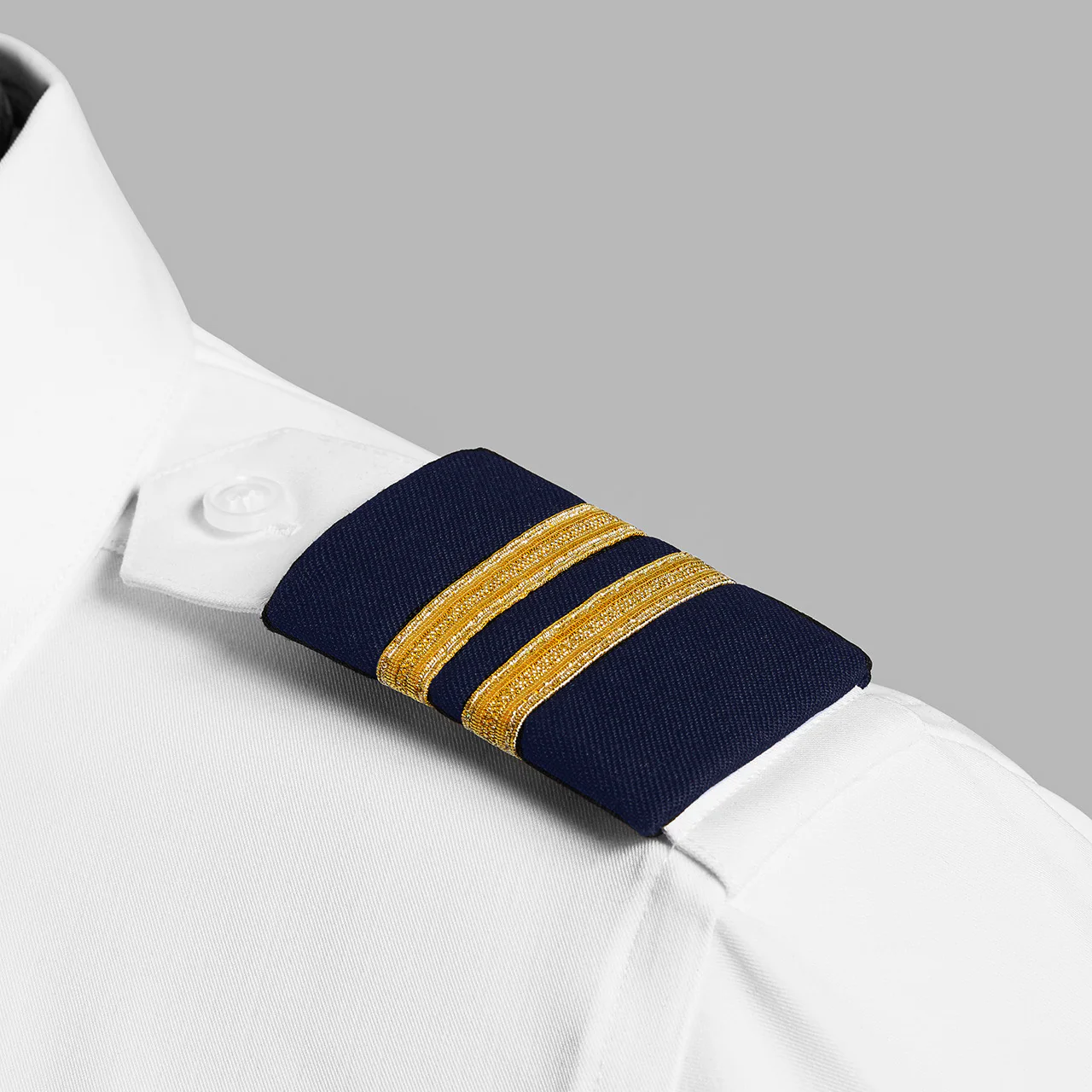
The current revival feels different from past cycles. Instead of being purely about sharp tailoring or glamour, it is also tied to nostalgia, identity, and the visual language of rank.
Why are shoulder epaulettes back right now?
Shoulder epaulettes are back because fashion is leaning into structure again. After years of oversized softness, many collections are moving towards defined shoulders, crisp lines, and deliberate detailing that reads clearly on camera and in real life.
They also fit the current appetite for references people instantly recognise. Shoulder epaulettes signal “uniform”, “power”, and “ceremony” in a split second, which makes them useful in an era of fast scrolling and micro trends.
What do shoulder epaulettes actually signal to the viewer?
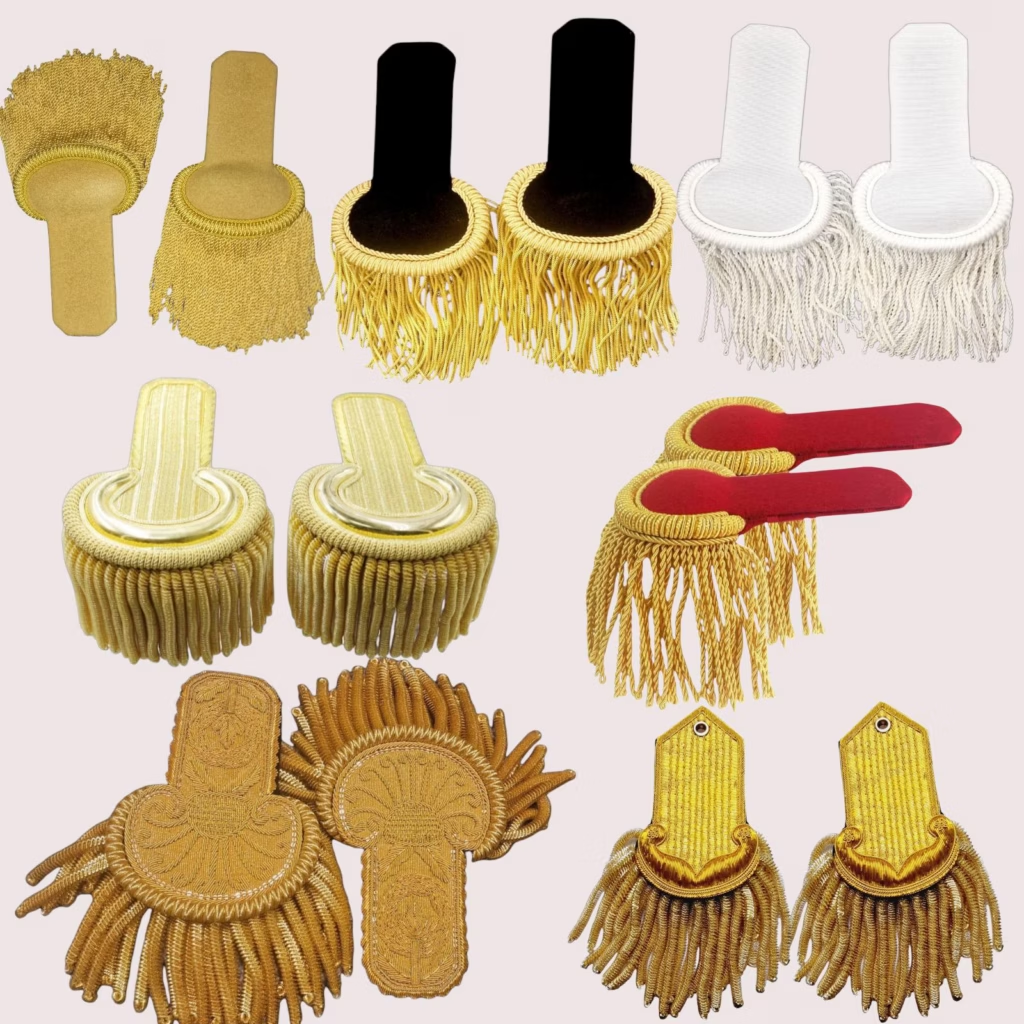
They signal status, function, and discipline, even when the garment is casual. Shoulder epaulettes borrow their visual authority from military and service uniforms, so the eye reads them as purposeful rather than decorative.
That meaning carries over into fashion. When a jacket has shoulder epaulettes, it can feel more commanding than the same silhouette without them, even if the rest of the outfit is simple.
How did shoulder epaulettes move from uniforms into everyday fashion?
They moved through tailoring, cinema, and subcultures that borrowed uniform cues to create identity. Designers have long drawn on military dress because it is already a refined system of proportion, hierarchy, and symbolism. Learn more about the influence of military uniforms on fashion.
Over time, shoulder epaulettes became a shortcut. A trench coat, a safari jacket, or a structured shirt instantly looks “finished” once the shoulders carry that extra element.
Why does uniform culture still “own” shoulder epaulettes?
Uniform culture still claims them because they remain tied to real-world rank systems. In many services, shoulder epaulettes are not optional styling; they are part of how roles are read and respected in daily operations.
That creates an unusual tension. Fashion can treat shoulder epaulettes as aesthetic, but uniforms treat them as information. The overlap is why the detail keeps its charge, and why it never becomes just another trim.
Are designers using shoulder epaulettes to sell authority?
Yes, because authority is one of the clearest emotions clothing can project. A consumer may not want to look “military”, but they might want to look composed, decisive, or elevated, and shoulder epaulettes help deliver that impression.
The effect also works across price points. A budget shirt can feel more premium with shoulder epaulettes because the detail suggests construction, intention, and a sense of officialness. Explore how military-inspired details shape modern fashion.
Which garments are bringing shoulder epaulettes back?
The revival is showing up most in trenches, cropped jackets, utility shirts, and fitted blazers. It is also appearing on dresses that borrow from shirting, where the shoulder is treated like a frame.
Outerwear is doing most of the heavy lifting because shoulder epaulettes are easiest to read on thicker fabrics. But they are also returning on lighter pieces, where the point is contrast: softness everywhere else, structure right at the top.
Is this trend about nostalgia, or something more current?
It is nostalgia, but it is also about clarity. Many people are dressing for hybrid lives, switching between casual and formal settings, and details like shoulder epaulettes add instant polish without needing a full suit.
It also reflects renewed interest in heritage and “real” craft. Shoulder epaulettes imply a pattern-cutting tradition, which helps brands tell a story about quality even when the garment is mass produced.
How are shoulder epaulettes being styled without looking like a costume?
They work best when the rest of the outfit stays grounded. Pairing a jacket with shoulder epaulettes with straight-leg denim, plain tees, simple knits, or clean boots keeps the look modern.
It also helps when the hardware is minimal. Many contemporary versions use tone-on-tone buttons or stitched tabs, so the reference is there without looking like a full uniform replica.
What is the cultural tension when fashion borrows from uniforms?
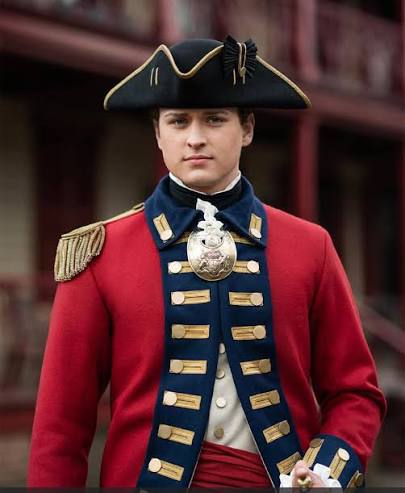
The tension is that uniforms can represent service and community, but also control and exclusion, depending on history and context. When military-inspired clothing borrows those codes, it can feel like admiration, parody, or appropriation, even if the wearer does not intend any message.
That is why shoulder epaulettes can start conversations. A small shoulder detail can carry big associations, and the same jacket may read differently in different communities.
Will shoulder epaulettes stay, or fade again?
They will likely stay in rotation because they are functional for design. They create visual structure, improve how garments sit on the body, and provide a focal point that photographs well.
Even if the current wave cools, shoulder epaulettes rarely disappear completely. They tend to retreat into classics like trenches and utility jackets, then surge again when fashion swings back to sharp shoulders and uniform cues.